Audit a laboratory the same way every time — with or without a network.
eSLIPTA is the tool a laboratory audit is actually conducted in: question by question, with the evidence attached, scored by a fixed method any reviewer can reproduce, and turned into a corrective-action plan that is tracked until it is verified effective.
Everything on this site is public. There is no login, no request-access form and no gate anywhere on it — signing in belongs to the tool, not to the information about it.
Find what you need
What this is, in plain language
What the checklist measures, how an audit runs from planning to sign-off, and how a score becomes a star rating — with worked examples you can check.
How it works Auditors and laboratory staffSee inside the tool
The screens as they actually are: capture with the evidence gate, the scorecard, reports, the corrective-action plan and the sync centre.
Inside the tool Laboratory and programme managersRoles, scope and confidentiality
Who can see what, from a single laboratory up to a regional view, and what the system will not show to whom.
For laboratories Reviewers and technical partnersStandards, provenance and limits
What the instrument is anchored to, where the demonstration data comes from, and — stated plainly — what this system does not do.
Standards & FAQWhat the tool does
An audit is captured one question at a time. A question that awards points must have evidence attached before the audit can be closed — the tool refuses the close otherwise, and so does the server independently.
Scoring is fixed and integer-only. The same answers always produce the same score, on the device and on the server, and the server recomputes it rather than trusting what the device sends.
Every finding can become a corrective action, which is not complete when someone performs it — it is complete when its effectiveness has been reviewed and recorded.
- Works with no network. Audit in a laboratory with no signal. Answers are saved on the device and reconcile in the background when a connection returns.
- Nothing is lost. Work in progress survives an accidental close, a flat battery or a crashed tab, because it is written to the device before it is sent anywhere.
- Reproducible scoring. Integer arithmetic, one engine, and the server counter-signs the number rather than accepting the client's claim.
- Evidence or no points. A question scored Yes or Partial without evidence blocks the close — enforced on the device and again at the server.
- Signed close. Closing binds the signer, the moment and the exact scored figures together, so a later edit is detectable rather than silent.
- One build everywhere. The same application runs in a browser, installs to a phone home screen, and ships as an Android app.
How a score becomes a star
The star is decided by percentage, not by a raw point count — because questions marked not applicable leave the denominator, so two laboratories with the same points can sit at different percentages.
| Stars | Percentage of applicable points |
|---|---|
| 5 stars | 95.00% and above |
| 4 stars | 85.00% – 94.99% |
| 3 stars | 75.00% – 84.99% |
| 2 stars | 65.00% – 74.99% |
| 1 star | 55.00% – 64.99% |
| No stars | below 55.00% |
Source: the scoring engine's own band table. Worked examples, and what happens to blanks and to not applicable, are on How it works.
Install it on a phone or tablet
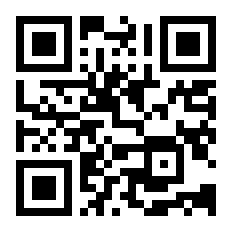
eSLIPTA runs in any modern browser and installs to a home screen so it opens like an app and works offline. Point a phone camera at the code to open it there.